Therapeutic Care
A space for what needs more time, depth and care.
Healing is rarely tidy or comfortable, and no two healing journeys look quite the same.
Some experiences pass through us, while others continue shaping how we feel, think and relate. In our sessions, we slow down enough to notice what is happening beneath the surface. You do not need to arrive knowing what needs healing. We begin where you are.
You can feel safe here and uncomfortable at the same time. You do not have to face that discomfort alone.
I listen with sensitivity, reflect what I notice, and ask whether it feels true for you. I will not tell you what to do, but I may challenge something that feels important enough not to pass by.
Difficult feelings, contradictions and protective parts are welcome here. They can be met with compassion without being excused from responsibility. Every part of you is welcome here. And every part of you can be held accountable.
What once protected us does not have to keep directing us.
You learned ways to adapt and protect yourself in response to what life asked of you. These defenses are not failures. They were survival responses to circumstances in which you needed them.
They become limiting when they continue to show up automatically, directing your life long after those circumstances, or the needs they once served, have changed.
There is no need to strip those protections away or force our way toward the wound. Our work is to understand what they protected and tend to what still hurts underneath. As safety, awareness and choice grow, those defenses can become less rigid and automatic.
Some of what you carry will fit into words, and some of it won't.
When words are not enough, or when talking keeps us at a distance from what we feel, image, color and material offer another language. Giving something form can allow us to meet what is inside from a different perspective.
You do not need to be artistic. I will not interpret your artwork for you; its meaning belongs to you. We become curious about what emerged and what happened while making it. Often, the healing is not in the finished piece, but in the process of creating it.
Verbal psychotherapy
Conversation, reflection and deeper exploration through words.
Art therapy
Image and material offer another language when words are not enough.
An integrated approach
We move between the two according to what the work needs.
Healing doesn't erase the wound. It changes our relationship to it.
The wound can become a scar: part of your history, something that has shaped you without continuing to govern how you see yourself, your relationships or your life. You do not have to be grateful for what happened or pretend the suffering was necessary.
Changes you may notice
- More space between feeling and reacting.
- A different way of relating to the old stories shaped by your wounds.
- Defenses becoming less rigid and automatic.
- More choice in how you relate to yourself and to others.
Our relationship is part of the work.
The therapeutic relationship can become a practice ground for honest and authentic relating. There is room for boundaries, vulnerability, disagreement, challenge and repair, all within a relationship held with safety and respect.
The aim is not dependence on me or on therapy. It is to experience and gradually internalize a healthier way of relating, so that what is practiced here becomes available in how you relate to yourself, to others, and to life.
About Leyla
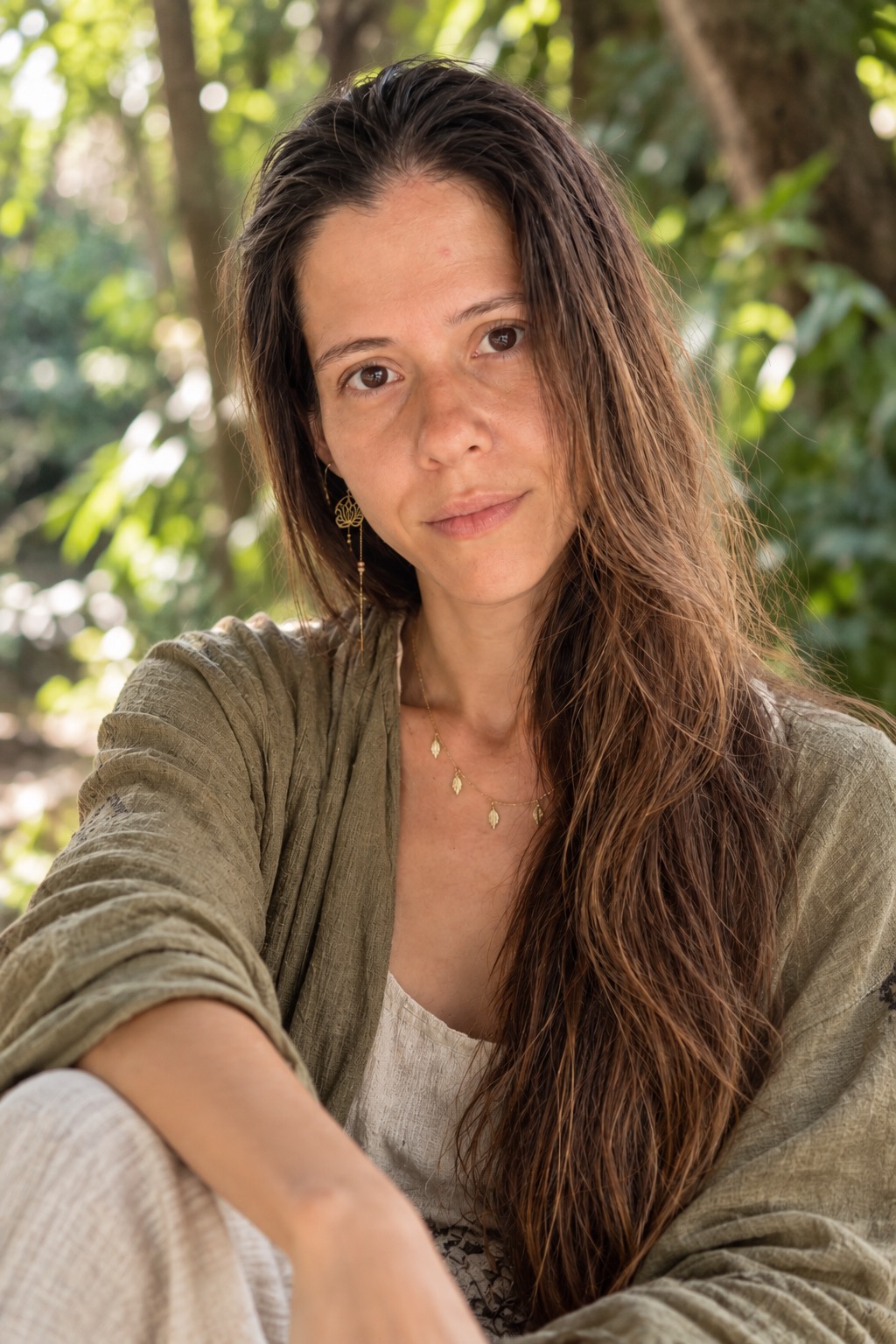
Over the past 15 years, my work in trauma-informed mental health support, alongside my own personal journey, has taught me that meaningful change does not always ask for the same kind of support.
My practice brings together trauma-informed psychotherapy, creative arts therapy and Jungian approaches to integration while keeping the person, rather than the method, at the centre of the work.
- Creative arts psychotherapist. MA in Art Psychotherapy, School of Visual Arts, New York.
- Senior technical advisor in mental health and psychosocial support (MHPSS). Field work after the Van and Hatay earthquakes, Hurricane Sandy, and the Soma mining disaster.
- Published outcome research on art-based trauma treatment (Ugurlu, Akca & Acartürk, 2016).
- Trainer and clinical supervisor.
Ready to continue, or already know you want to begin?
If you are unsure what kind of support you need, we can start with a conversation.
I offer a brief, free introductory conversation so we can meet. You can tell me what brings you here, ask your questions, and together we can consider what kind of support may best fit what you are navigating.
If what you need falls outside the scope of my work, we can think through what care would serve you better.